When the deadline is fixed, the logistics plan has to work the first time.
For most of the last decade, a repower schedule had some give in it. If a crane showed up late or a route needed rework, the project slipped a few weeks and the economics still held.
2027 is different.
Under the federal tax law passed in July 2025, wind and solar projects that begin construction after July 4, 2026 have to be placed in service by December 31, 2027 to qualify for the federal production or investment tax credit. Projects that started construction before that date have more time, but only if they keep construction moving without long gaps.
For a repower that hasn’t broken ground yet, that leaves about twelve months to finish the engineering, get the components to site, and get the new turbines turning. A delay that used to cost a few weeks can now cost the credit itself.
That changes what a logistics plan has to do. It isn’t enough for the plan to work eventually. It has to work the first time.
Here’s where repower schedules usually slip, and what it takes to keep yours from slipping.
The route nobody checked until the parts shipped
Repower components are bigger than the ones they replace. The average wind turbine has grown from about 1.5 MW in 2006 to about 6 MW today, and the blades, nacelles and tower sections have grown with it. The roads, bridges and turns that handled the original delivery may not handle the new one.
When a route problem turns up after components have shipped, the fix means permit revisions, road improvements or a new route. That takes weeks the schedule no longer has. Route feasibility needs to happen before the turbine order is final, not after.
Engineering and logistics answering the same question separately
A common pattern: the engineering review confirms the site can take a new turbine, then the logistics team finds that turbine can’t reach the pads. Or the route gets solved for one set of components, and the specs change after. Every round trip between the two teams costs time.
In a normal year, that’s frustrating. In 2027, two separate plans that first meet in the field is a risk most owners can’t carry.
Components that arrive before the site is ready
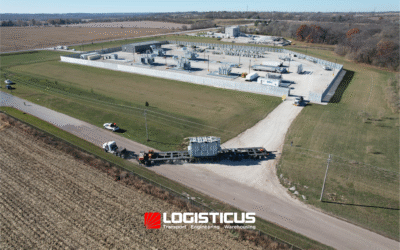
Supply chain timing rarely lines up with construction. When blades, towers and nacelles arrive early, they need a safe place to wait, close to the project, inventoried and protected. Without that, they sit at a port building up fees or get staged on a site that isn’t ready for them, where the risk of damage goes up.
Logisticus operates more than 6.2 million square feet of indoor and outdoor storage across 10 states, so components can wait close to where they’re going.
Removal that runs long
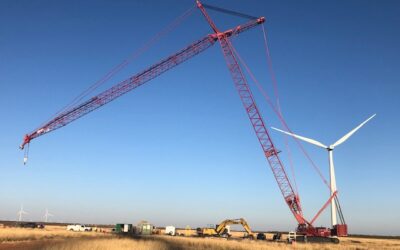
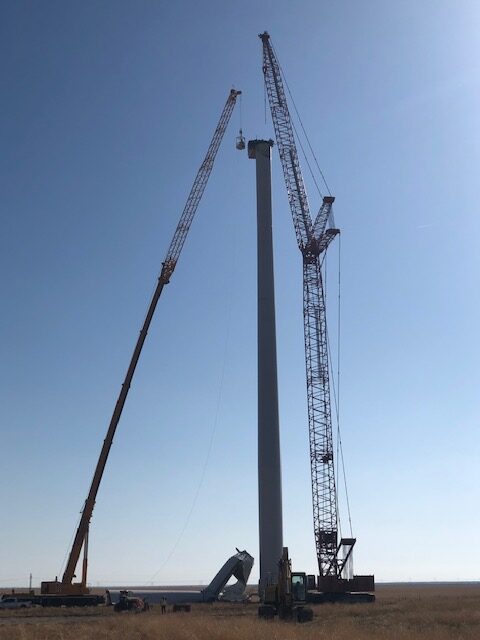
Every repower starts with what comes down. Old blades, nacelles and tower sections have to be removed, sorted and sent to recycling, scrap or resale before the new install can start. If removal falls behind, everything behind it slides.
That’s why removal deserves its own plan, crew and schedule. When Logisticus recently brought down a failed 2.5 MW turbine for a major turbine manufacturer, weather shut the site down for nearly a week. The project still finished ahead of schedule.
Damage you can’t absorb
A blade damaged in transit or storage is never a small problem. In a year when much of the industry is working toward the same deadline, a replacement may not come quickly. Documenting every component at every handoff, and catching damage before it reaches the pad, protects the schedule as much as the part.
What a deadline-ready repower plan looks like
- Route feasibility finished before the turbine order is final
- Engineering and logistics working from one plan, not two
- Storage lined up before the first component ships
- Removal planned and staffed as its own phase
- Every component tracked and documented from origin to pad
Logisticus brings all of this under one team. Our in-house engineers handle route feasibility and civil transport engineering, and the same organization runs the heavy transport, the warehousing and the inventory tracking. One team is accountable from the first route study to the last component lifted into place.
If your repower has to be turning by the end of 2027, the time to build that plan is now.
Planning a repower for 2027? Talk to our team.
More Innovation. Less Risk.