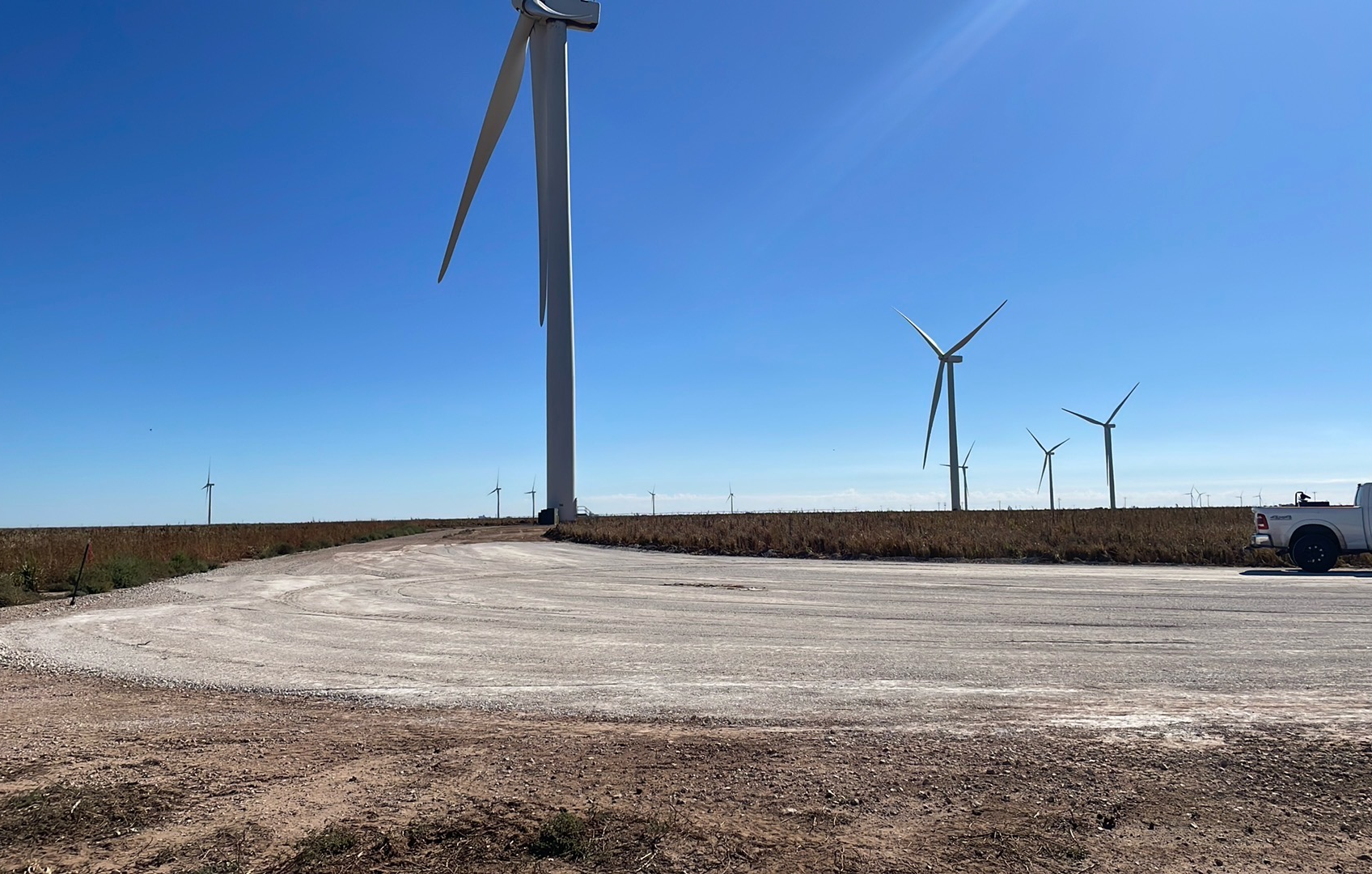
By the time most operators decide to repower, the case is already clear. The turbines are aging, the technology has moved on, and the site still holds the two things that are hardest to secure in wind energy: an approved permit and a live grid connection. Repowering turns those standing assets into more energy and years of added project life, without going back to square one.
The decision, in other words, is usually the easy part. Delivering the repower is where projects get complicated.
A repower isn’t a like-for-like swap. Newer turbines are bigger and more powerful, and that added capability ripples through every part of the site. The structures holding the machines up, the cabling moving power across the site, the permits that govern how tall a turbine can stand, and the roads that have to carry oversized components to each pad. And all of it happens on a site that, ideally, never stops generating.
Here’s what has to be gotten right.
Can your structures carry the upgrade?
More powerful components place new loads on foundations and towers that were engineered for lighter machines. Before anything is ordered, someone has to determine whether the existing structures can handle the upgrade or whether they need reinforcement or replacement. Get this wrong, and the consequences show up years later, in the field.
Can your electrical system handle more power?
A repower pushes more electricity through infrastructure that may not be sized for it. The underground cabling that carries power across the site and the connection to the grid both have to be evaluated for the new load. In some cases, sections have to be upgraded to carry the additional energy safely.
Will a taller turbine change your permits?
Many wind permits set required distances between turbines and homes, roads, and property lines. Those setbacks are often tied to how tall the turbine stands and how far its blades reach. A more capable machine can be taller, which can trigger a fresh setback analysis to confirm the upgraded turbines still comply.
Can you get the new components to the pad?
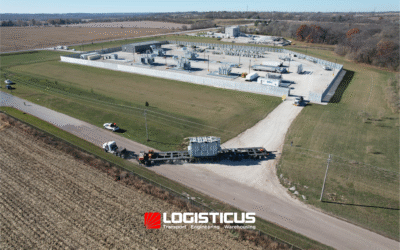
This is the challenge that catches projects off guard. Repower components are enormous, and they have to travel public roads and site access routes that weren’t built with them in mind. Road grades, turn paths, surface and bridge conditions, and the space to stage and operate heavy cranes all have to be worked out in advance on a site that’s still live and generating revenue.
Why these can’t be solved in separate rooms
The trap in a repower is treating these as separate problems. They aren’t. Whether your foundations can take a larger turbine depends on which turbine you can actually get to the site. Whether a route works depends on the size and weight of the components your engineers specify. When engineering and logistics work in isolation, the gaps between them turn into change orders, delays, and risk.
This is where Logisticus is built differently. We’re a logistics company with engineering in-house. The same organization confirming whether your structures, cabling, and grid connection can carry the upgrade is also planning how every component and crane reaches your site. Structural, electrical, civil, and transport considerations get weighed together, by one team accountable from the first feasibility study to the final component lifted into place.
That means fewer handoffs, fewer surprises, and a plan that reflects how the repower will actually be built, not two plans that meet for the first time in the field.
A repower is one of the smartest moves an operator can make with an existing asset. Realizing that value comes down to execution, to getting the engineering and the logistics to move as one.
That’s the part we’d like to talk about.