Most conversations about repowering focus on what goes up: bigger rotors, more efficient nacelles, more energy from the same site. But every repower starts with what comes down. When the turbine coming down has failed in the field, that first phase can be the hardest part of the job.
Logisticus supported a major turbine OEM on exactly this kind of project, the removal of a failed 2.5MW turbine. Here’s what the work involved and what it takes to get it right.
The Job
The turbine had failed on its pad. The rotor and blades were on the ground, and the nacelle and upper tower section were still standing.
Logisticus was brought in to provide site supervision, transportation, and crane services. Across two mobilizations, the team:
- Removed the remaining nacelle and upper tower section
- Sent the nacelle to scrap and set the tower section on cribbing for further inspection
- Coordinated transport of the hub and smaller components to a scrap yard
- Cut the remaining blades on site and hauled them to a fiberglass disposal facility
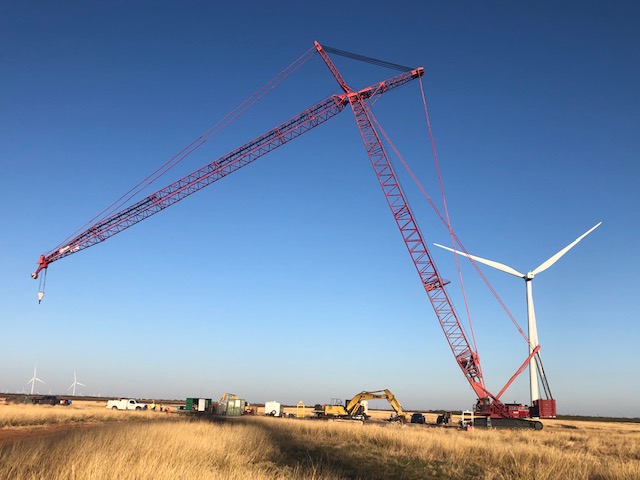
The equipment on site shows the scale of the work:
- Manitowoc 16000 crawler crane
- Liebherr hydraulic crane
- Large excavator
- 15,000-lb telehandler
- Mini excavator fitted for cutting
- Front-end loader
What Has to Be Gotten Right
Lifting a structure that’s already compromised
Taking down a healthy turbine follows a familiar sequence. A failed turbine doesn’t. Every lift has to account for damage, so the method statement matters more than usual. That’s the agreed, step-by-step plan for how each task gets done. Logisticus managed every crew on site and held the work to that plan from start to finish.
Sending every component to the right place
A turbine removal isn’t one haul. It’s many, each going somewhere different:
- The nacelle went to scrap.
- The tower section went to inspection.
- The hub and small parts went to a scrap yard.
- The blades went to a specialized fiberglass disposal facility.
Logisticus documented and inventoried every scrap component. The team also served as the single point of contact for blade drivers during loading, so nothing left the site unaccounted for.
Keeping many crews on one plan
Crane operators, excavator crews, truck drivers, and OEM representatives fill a removal site fast. Each day started with a plan-of-the-day meeting with the crew. The customer had one point of contact at Logisticus for the life of the project. The OEM’s team stayed on site to answer questions while Logisticus ran the work.
Protecting the schedule when the weather won’t cooperate
Inclement weather shut the site down for nearly a week. The project still finished ahead of schedule.
Watching for safety and environmental risk
Logisticus monitored site operations throughout for safety and environmental concerns. Every step was photographed, and operational data was captured in Logisticus’s logistics management system. The project closed with no concern reports filed.
Why This Matters for Your Repower
The removal phase sets the tone for everything after it. A clean pad, a full record of where every component went, and a schedule that’s still intact all mean the new turbines can go up without inherited problems.
It also matters how many hands the work passes through. Supervision, lifting, transport, and disposal under one plan and one point of contact means fewer handoffs and fewer gaps. And when the same partner can engineer and move the new components in, the whole repower runs on one team.
Planning a repower? Talk to our team.