Section 232 introduces minimum import prices and new duties on solar modules, cells, and polysilicon. For a 100 MW project, industry analysts estimate the added equipment cost could reach roughly $10 million. The teams that come through this in the best shape will be the ones that plan their sourcing, timing, and storage now — with a partner that already has the capacity in the ground to move.
A new cost is about to hit imported solar hardware
On August 6, 2026, the federal government issued a Section 232 proclamation covering polysilicon and the solar products made from it: wafers, cells, and finished modules. The measures take effect at 12:01 a.m. on December 4, 2026.
Two things change for anyone importing solar equipment:
- A minimum import price (MIP) on covered products. For solar modules, the floor is $0.38 per watt; for cells, $0.22 per watt; for polysilicon, $21 per kilogram. If a product is priced below the floor, the gap is made up in duty.
- An additional duty on covered downstream products – generally 15%, with different treatment for certain countries.
There’s also a documentation requirement worth understanding. If an importer can’t provide the required pricing and origin documentation, the duty can be assessed at the full minimum import price rather than just the shortfall. In practical terms, a clean, well-documented supply chain is now worth real money.
What this means for your project
The headline is cost. Recent industry analysis estimates the framework could add roughly $0.10 per watt to module costs, depending on how the modules, cells, and wafers are sourced. On a 100 MW project, that’s about $10 million in additional equipment cost — enough, by the same analysis, to require an estimated $4–$5 per MWh more in PPA pricing to offset.
But cost is only part of the story. For most teams, the bigger exposure is timing and documentation:
- Equipment quoted today may not reflect the final landed cost once the rules take effect.
- Two projects buying similar modules can end up with very different exposure depending on where the products are made and when they enter the U.S.
- Deliveries scheduled around early December carry real uncertainty.
This is the moment Logisticus is built for
As December 4 forces procurement and project teams to rethink timing, sourcing, and storage, the hard question stops being “can we buy the equipment?” and becomes “where does it go, and how does it reach the site on schedule?” That’s precisely the pressure point we sit on and we’ve scaled for it.
As demand for domestic staging has surged ahead of the deadline, we’ve built the capacity to meet it. Over the last 15 months, Logisticus has leased more than 6.2 million square feet of secure indoor and laydown space across 10 states – a pace of industrial expansion few companies of any size have matched – positioned along key U.S. freight corridors and near major ports of entry. Those are the places solar equipment lands, and the places it has to move from. When the market scrambles for space, we already have it.
Whatever sourcing and timing strategy you and your trade counsel land on, we give you the domestic capacity to execute it, to receive equipment when the timing is right for your project, stage it securely, and get it to site on schedule:
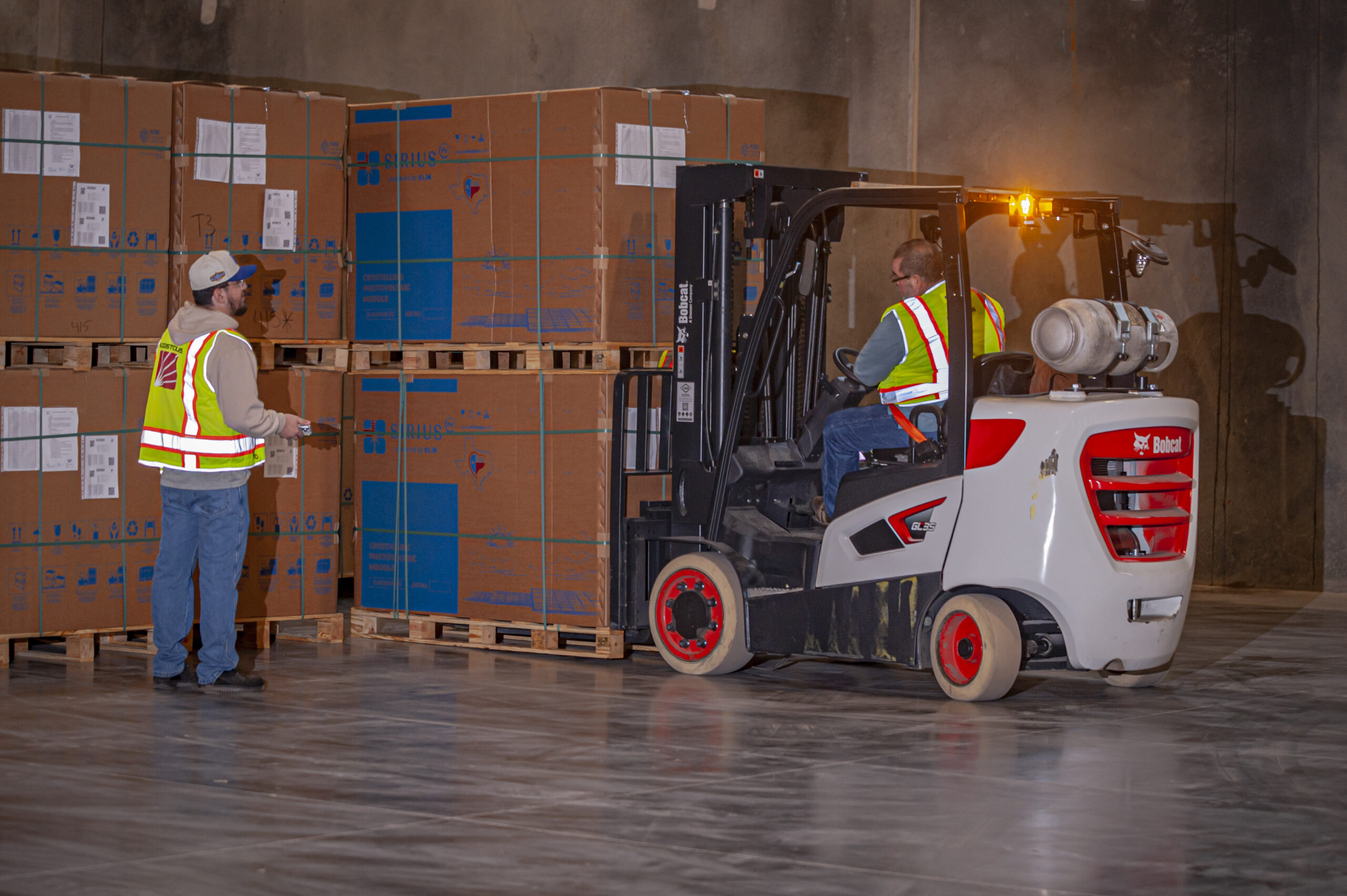
- Secure warehousing and laydown yards near major U.S. ports and solar development corridors, so equipment can be received, cleared, and staged close to where it enters and where it’s headed.
- Site layouts engineered for solar hardware, high-density storage built for modules, inverters, and tracker pallets, not generic pallet racking.
- Heavy-haul transport and site delivery planned alongside the storage, so staging and final-mile move as one coordinated plan.
And because our engineering and operations teams work under one roof, your storage plan, your transport plan, and your site delivery aren’t three separate conversations, they’re one. Fewer handoffs, fewer gaps, one team accountable from port to site. That’s how you take timing risk off the table instead of adding to it.
If you have equipment under contract, a purchase decision ahead of you, or deliveries that could land around December 4, now is the time to map your staging and storage plan. Talk to Logisticus about protecting your project timeline and budget before the deadline.