For years, utility-scale solar projects operated on a lean philosophy: deliver materials just in time, install immediately, and move on. But as projects scale in size and complexity, that model is increasingly risky — and often unworkable.
Today, developers and EPCs are shifting toward strategic staging and long-term storage as a core logistics strategy rather than a contingency plan.
The Problem with Pure “Just-In-Time” Delivery
Solar project timelines are no longer predictable. Several factors now introduce uncertainty:
- Interconnection delays
- Permitting bottlenecks
- Labor shortages
- Weather disruptions
- Financing or tax-credit timing
- Equipment arriving ahead of site readiness
When materials arrive before a site is prepared, developers face a costly dilemma: scramble for temporary storage or risk of detention fees, demurrage charges, or equipment damage.
Why Strategic Staging Is Becoming Essential
Large solar projects now involve thousands of components arriving from multiple global suppliers. Without coordinated staging, site congestion alone can derail construction schedules.
Strategic staging facilities solve several critical challenges:
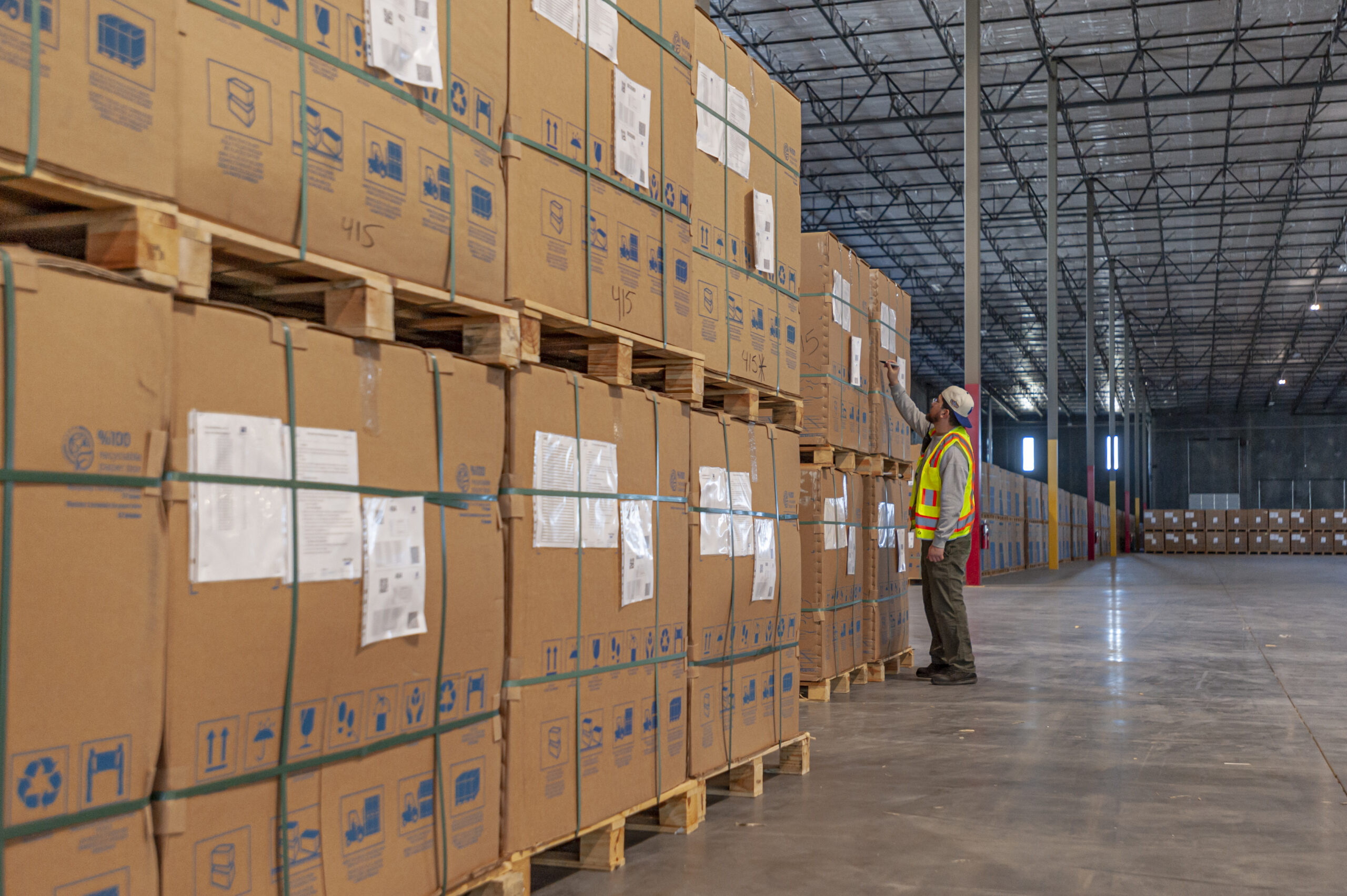
- Schedule Flexibility: Warehousing allows materials to be received, inventoried, and deployed according to construction sequencing — not shipping schedules.
- Reduced Site Congestion: Solar sites are not designed to function as distribution centers. Controlled off-site staging prevents bottlenecks and safety risks.
- Protection of High-Value Equipment: Modules, trackers, inverters, and transformers are sensitive assets. Proper storage conditions reduce damage risk and preserve warranties.
- Consolidation of Multi-Vendor Shipments: Solar projects are rarely sourced from a single supplier. Staging facilities enable consolidation, kitting, and coordinated delivery.
The Financial Case for Staging
At first glance, warehousing appears to add cost. But, it often prevents far greater expenses:
- Avoided detention fees
- Reduced risk of theft or vandalism
- Prevention of damage claims
- Improved installation efficiency
- Protection against schedule slip penalties
For projects tied to tax credit deadlines or power purchase agreements, schedule certainty alone can justify staging investment.
What Effective Solar Staging Requires
Not all storage is equal. Solar equipment demands specialized handling, including:
- Heavy-lift capability for large components
- Secure facilities with controlled access
- Inventory tracking systems
- Weather protection
- Efficient outbound transportation coordination
Most importantly, staging must integrate seamlessly with transportation planning and site operations.
A Strategic Shift, Not a Temporary Fix
As solar deployments grow larger and more complex, staging is evolving from a reactive solution into a proactive strategy. Developers who plan for controlled storage gain flexibility, reduce risk, and improve overall project execution.
In today’s environment, the question is no longer whether staging will be needed but whether it has been built into the logistics plan from the start.